
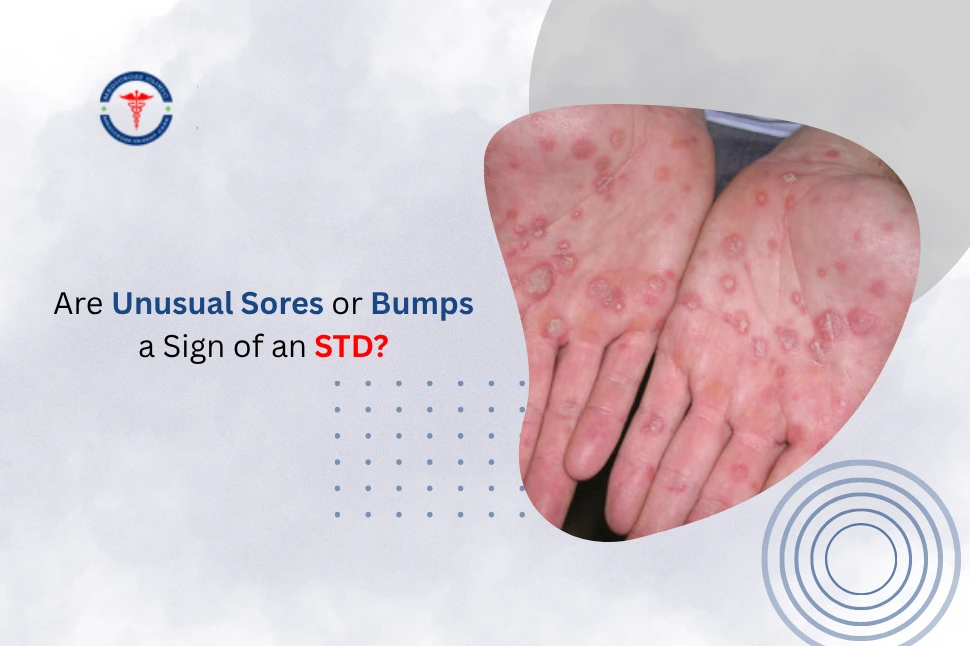
Finding a sore or bump on your body can feel scary. It can make you worry fast. Many people think right away about an STD.
Sometimes that is the cause. Sometimes it is not.
A bump may come from an ingrown hair, skin rash, allergy, or another infection. Still, it is wise to get it checked. Early care can help you feel better and can protect other people.
At Medicross Clinic and Urgent Care, you can get help for urgent health needs, testing and checkups in one place.
What Are STD Sores or Bumps?
Some STDs can cause changes in the skin. These changes may show up on the:
- Mouth
- Genitals
- Butt area
- Thighs
- Groin
It can appear to be a small or large sore or bump. It can be red, white, or skin-colored. It may or may not be painful.
It may also:
- Itch
- Burn
- Leak fluid
- Turn into a scab
- Come in a group
Not all bumps are STDs. However, you shouldn’t take a guess. Your doctor may be able to help determine the actual cause.
STDs That Can Cause Sores or Bumps
Herpes
Herpes can cause small blisters or sores. They may be painful. They may burn or itch.
Some people also feel:
- Fever
- Tiredness
- Body aches
The sores may come back again later.
Syphilis
Syphilis can start with one sore. This sore is often round and firm. It may not hurt.
Because it does not always hurt, some people do not notice it.
If not treated, syphilis can become serious later.
HPV
HPV can cause genital warts. These may look like small bumps. They can be rough or soft. Some may grow in a group.
Some individuals exhibit no signs at all.
Molluscum Contagiosum
This infection can cause small, round bumps. They may have a tiny dent in the middle. They are often not painful.
Signs You Should Get Checked
See a doctor if you notice:
- New sores or bumps
- Pain when urinating
- Unusual discharge
- Itching in the genital area
- Bleeding that is not normal
- Fever with sores
- Swollen glands
- Pain during sex
Even if the sore is small, it is still worth a visit.
When Should You Get Tested?
You should think about testing if:
- You have sores or bumps
- You had sex without a condom
- Your partner has symptoms
- You have a new partner
- You want peace of mind
Testing is a smart step. It can help you know what is going on.
What Happens During Testing?
Testing is often simple.
A visit may include:
- A look at the sore or bump
- A urine sample
- Blood work
- A swab from the area
The doctor may ask a few questions about your symptoms and your recent sex history. This helps them choose the right test.
How Are STDs Treated?
Treatment depends on the STD.
Some STDs can be cured with medicine, such as:
- Chlamydia
- Gonorrhea
- Syphilis
Some STDs, such as herpes or HPV, may not completely disappear. But treatment can help with symptoms and lower future problems.
A doctor may tell you to:
- Take medicine as directed
- Avoid sex for a time
- Tell recent partners
- Come back for a follow-up visit
Ways to Lower Your Risk
You can take steps to protect your health:
- Use condoms the right way
- Get tested often
- Talk with partners honestly
- Avoid sex if you have sores
- Ask about vaccines, like the HPV vaccine
Small steps can make a big difference.
Why Early Care Matters
It is easy to feel shy or scared. Many people do. Still, early care is important.
Getting help soon can:
- Lower stress
- Stop the problem from getting worse
- Help you heal faster
- Protect your partner
- Give you clear answers
Waiting often makes worry bigger.
When Urgent Care Can Help
Urgent care can be a good place to go when you do not want to wait long for help.
You may want urgent care if you have:
- A new sore
- Painful bumps
- Burning when you pee
- A rash that came on fast
- Questions about STD testing
Medicross Clinic treats urgent health problems. They do lab tests. They offer check-ups and STD testing.
Final Thoughts
Unusual skin rashes or bumps don’t definitively mean you have an STD. A variety of infections, such as herpes, syphilis and HPV, can result in changes that occur on the skin. There are other issues with symptoms that are similar as well.
It is best to seek advice by having a doctor examine you. No need to wonder. Speak up!
Visit Medicross Clinic and Urgent Care. They provide testing and treatment for sores and bumps.
FAQs
Q. Is every bump STD?
No. Many bumps are not STDs. They may be from skin irritation, shaving, or another infection.
Q. Can an STD be treated?
Yes. Many can be treated. Some can be cured. Others can be managed.