
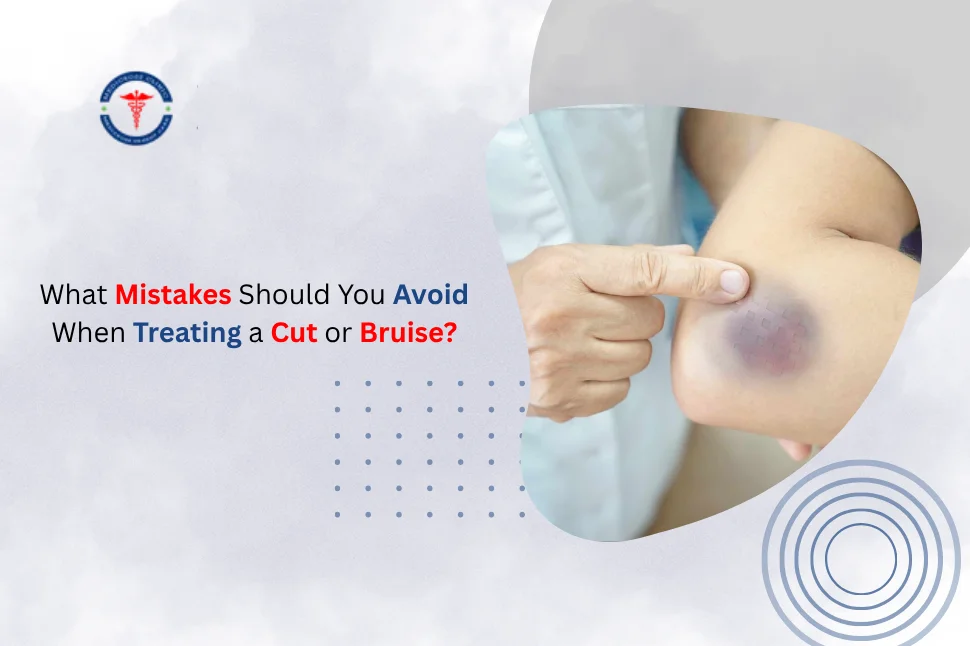
Cuts and bruises are common and can happen anywhere. Inadequate first aid for cuts can lead to slow healing, more pain, or infection. Knowing the right care is crucial for recovery.
Medicross Clinic and Urgent Care helps patients who are unsure if they need medical attention. We provide prompt wound care and expert assessment for safe healing.
Below are common mistakes people make and how to avoid them.
Common First Aid Mistakes to Avoid
The first few minutes after a cut are very important. Many people make simple mistakes.
Common mistakes include:
- Not washing the cut right away
- Touching the cut with dirty hands
- Using strong things like alcohol or harsh liquids
- Ignoring bleeding that does not stop quickly
The Correct first aid for cuts starts with caring. Wash your hands first. Then gently clean the cut with clean water. Do not rub it hard.
Good care at the start helps the cut heal faster and hurts less.
How to Treat a Deep Cut the Right Way
Some cuts are small. Some are deep and serious and need extra care.
Mistakes to avoid:
- Ignoring heavy bleeding
- Waiting too long to see a doctor
- Trying to close the cut at home
- Putting toothpaste, oil, or home items on the wound
These situations can deepen the injury.
What you should do instead:
- Press the cut gently with a clean cloth to stop bleeding
- Keep the injured part raised if possible
- Cover it with a clean bandage
- Go to a doctor quickly if the cut is deep
Deep cuts may need stitches and should be treated quickly.
How to Get Dirt Out of a Cut Safely
Sometimes dirt gets inside a cut. This can cause infection if not cleaned properly.
Wrong ways:
- Scraping the cut with nails or sharp things
- Using strong chemicals
- Ignoring small bits of dirt
Safe way:
- Wash the cut with clean running water
- Use mild soap around the cut area
- Use clean gauze to get rid of any visible dirt by gently touching it
Do not be obsessed with getting dirt out if it does not. A doctor can safely clean it.
How to Prevent Infection in a Cut
Infection can make a small cut turn into a big problem.
Signs of infection include:
- Red skin around the cut
- Swelling
- Pain that gets worse
- Pus or yellow fluid
To prevent infection:
- Clean the cut quickly
- Do not touch it with dirty hands
- Change bandages often
- Keep the area dry and clean
- Stay away from dirty water
Good care helps the skin heal without problems.
At Medicross Clinic and Urgent Care, we provide quick evaluation and treatment to stop infections early and support fast recovery.
How Do You Treat a Scrape and Scratch?
Scrapes and scratches may seem minor, but they still need proper care.
Correct care includes:
- Gentle cleaning with water
- Keeping the area covered if needed
- Avoiding scratching or picking at scabs
- Protecting from dust and germs
This helps prevent scarring and infection.
Bruise Care Mistakes to Avoid
A bruise happens when you bump your body, but the skin does not break. It can still hurt and needs care.
Common mistakes include:
- Massaging the bruise immediately after injury
- Applying heat too early
- Ignoring swelling or severe pain
Better care:
- Apply ice within the first 24 hours
- Rest the affected area
- Keep it elevated if possible
See a doctor if the bruise is big, painful, or getting worse.
When to Stop Covering an Open Wound
Do not stop covering too early.
Keep it covered when:
- The wound is still open
- There is fluid or bleeding
- It is exposed to dirt or dust
You can stop covering when:
- New skin has formed
- No fluid is coming out
- The area is dry and closed
Even then, protect the skin from injury.
When Home Care Is Not Enough
Sometimes cuts and bruises might hide deeper issues than they show. Seek medical attention if:
- Bleeding does not stop
- The wound is deep or wide
- There are signs of infection
- Pain is getting worse
In these cases, professional care is needed.
Professional Wound Care
Medicross Clinic and Urgent Care offer quick and effective treatment of every minor wound and serious cut. Our team helps patients who need stitches, infection treatment, or injury checks.
We offer:
- Wound cleaning and evaluation
- Stitches for deep cuts
- Infection prevention and treatment
- Follow-up care for safe healing
- Walk-in and telemedicine consultations
We want to achieve speedy, safe and effective healing without having long ER visits.
Final Thoughts
Clean the cut or bruise with clean water and keep an eye on it to help it heal. Avoiding simple mistakes can also keep pain down and lower the risk of infection.
When a cut is deep, or a bruise seems serious, do not guess. Get it checked.
If you or your child has a cut or bruise that does not look right, visit Medicross Clinic and Urgent Care today for fast, caring and expert treatment. Walk in anytime or book a visit online. We are here to help you with your health and healing.
FAQs
What helps to heal cuts faster naturally?
Keep the cut clean. Cover it if needed. Drink water and eat healthy food like fruits and vegetables.
Can I talk to a doctor from home?
Yes. You can use online doctor visits. Medicross Clinic and Urgent Care can check your problem and tell you what to do next.